

If you want to skip the background, jump to the Unofficial Bolt Action Kingdom of Yugoslavia Army List PDF and click download.
With the imminent release of Armies of France, and the upcoming Armies of Europe, I was inspired to release this long worked on project. The Kingdom of Yugoslavia is one of the few nations completely unrepresented in Bolt Action, a problem I set out to remedy.
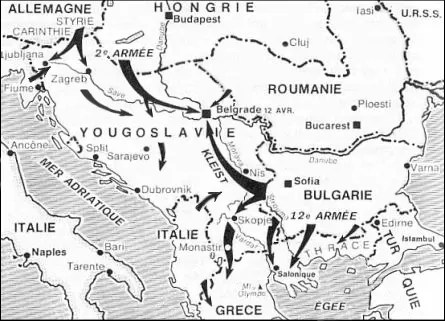
This Balkan nation emerged from the ashes of the First World War officially incorporating Serbia, Croatia, Bosnia-Herzegovina, Slovenia, Banat, Macedonia, Montenegro and Kosovo. Historically, the Kingdom of Yugoslavia had been firmly aligned with France and Great Britain, who had been staunch allies of Serbia in WW1. However, declining French influence and rule by a pragmatic but controversial regent, Prince Paul, led to initial Yugoslavian neutrality at the outbreak of WWII. Under pressure from Hitler, Prince Paul signed the Tripartite Pact in 1941, but military officers of the Royal Yugoslav Army would not stand for alignment with Germany. A coup followed, replacing the Prince with a pro-Allied government and triggering an Axis invasion of the country on all sides. In the end, the Kingdom held for only 11 days before collapsing. Yugoslavia, though down, was not out. Partisan warfare in the region would go on until the fall of Germany and would cost the Axis war effort dearly.
Why Play the Kingdom of Yugoslavia?
With all the other options in Bolt Action, why would anyone play overlooked Yugoslavia? Well for one, they make for a beautiful looking army. Gleaming Adrian helmets, crisp uniforms, some unique pieces of equipment, and tanks that feature striking camouflage, make for an army with a distinct feel. This is also the army of blood and guts. Its your average infantryman trying to hold the line. No Assault Rifles, no SMGs, and no “wonder weapons” of any kind. Just blood, sweat and steel. A true challenge for any player, it will require all your wit and skill to command these troops. Who doesn’t like to see an underdog have their chance at glory?
The problem is, no Army List exists for the rugged Yugoslavian footslogger. Until now!
Inspired by their unique history, I poured hours into researching, calculating and translating to produce an Army List for use in Bolt Action. All in an effort to provide those brave enough to try and hold back German Panzers with the hard-nosed Yugoslavian rifleman a means to do so.
The best part? We might even see a Yugoslavian list officially released by Warlord in the future.
The Royal Yugoslav Army
Before I get into the Army List, lets discuss some history. The Royal Yugoslav Army (RYA) was main branch of the military for the Kingdom of Yugoslavia when it entered the war against the Axis in April 1941. At that time, Yugoslavia boasted a large (when fully mobilized) army of more than 1 million men, including more than 4,000 artillery pieces, 34 Infantry Divisions, 3 Cavalry Divisions, 2 Armored Battalions, attached engineering units and a growing Air Force. Originally Hitler wanted to avoid a war with Yugoslavia, hoping to align the country politically rather than invading and opening another front. However, Italy’s blunders in Greece and the planned invasion of the Soviet Union would see diplomatic pressure ramp up against the Kingdom of Yugoslavia. When Prince Paul was ousted by his own generals for aligning with the Axis, invasion followed, and Yugoslavia’s large military was caught flatfooted.
Infantry
Looking at the Royal Yugoslav Army for use in Bolt Action, lets start with the humble Rifle Platoon. Yugoslavian Rifle Platoons were large with around 46 soldiers and lacked motorized transport. Tactics were influenced by WW1 experience and French doctrine which strongly influenced the way Platoons were structured. One Rifle Section acted as the maneuver element, while three LMG Sections provided fire support. The goal of the platoon was to maneuver into advantageous position, lay down fire, then close with an assault with grenade and bayonet.
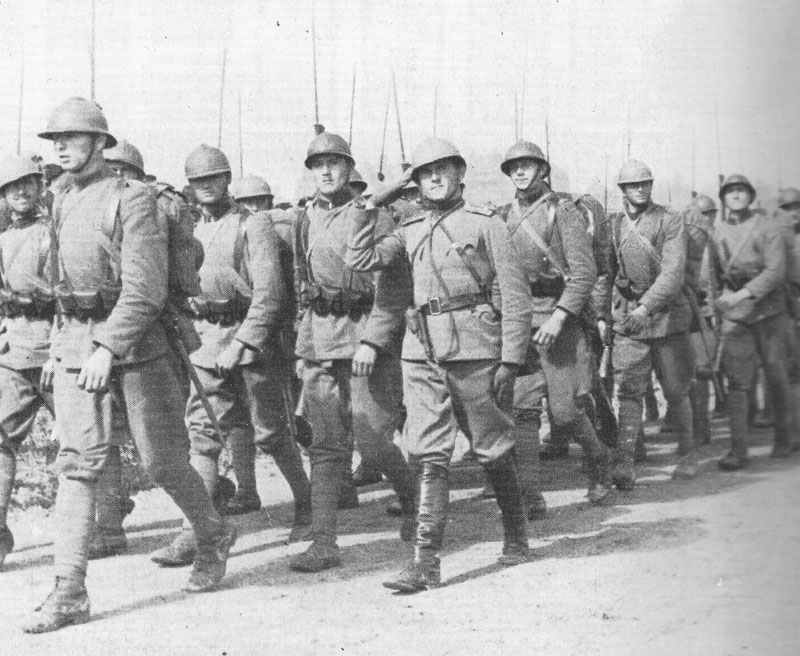
Infantry armaments were solid, with many quality small arms like the locally made 7.92mm M1924 rifle and imported Czech ZB 30 light machine gun. Yugoslavian Rifle Platoons had a VB Launcher in each squad to add additional firepower. Chetnik Assault Command troops (not to be confused with Chetnik Partisans) used an assault carbine version of the 7.92mm M1924 rifle. It also appears that 100 Thompson SMG was ordered, but never distributed to the troops. Officers were generally armed with only their sidearm. Four Platoons were formed then into a Company and relied on heavier support from the Battalion and Divisional level.
Support
At the Divisional level, there was a strong emphasis on artillery, resulting in a good ratio of artillery per Division (48 guns), and on forming flexible local formations called Odreds. Significant purchases of newer artillery from France and Czechoslovakia helped to modernize Divisional fire support, but the wide array of calibers proved to be a major logistical strain.
Mobile Forces
The main disadvantage of the Yugoslav army in WW2 maneuver warfare was its reliance on cattle traction. One British war correspondent described Germany’s invasion as “tanks against oxcarts”.
Despite its overall lack of motorization, Yugoslavia was an early adopter of the tank. They domestically produced a version of the Renault FT17, called the M-28, which featured a better engine than the venerable WW1 French tank. As conflict began loom over Europe the Yugoslavian military recognized the need for additional modernizing of its armored forces. Deals were brokered by the Yugoslavian government to import Czech and French tanks. The growing threat of war ultimately halted many of these purchases, as France and Czechoslovakia stockpiled for the coming storm. Some 9 Skoda tankettes and 54 of the French R35 tanks were purchased before invasion. These would represent the most modern armored equipment available to the Yugoslavians but it would be too little and too late.
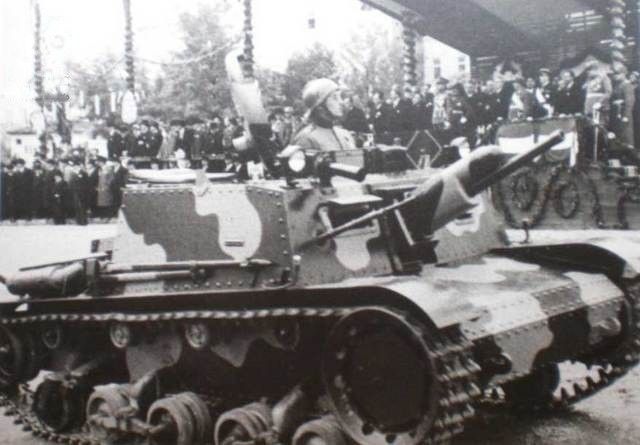
Left: A Czech made Skoda T32 tank on parade in Yugoslavia. Small and lightly armored, it boasted a hull-mounted 37mm gun which packed a powerful punch given its size.
Military Doctrine
Military Strategy for the army focused primarily on a defensive war, while simultaneously launching an offensive into Italian held Albania. Generals had planned for a defense at the border and then a retreat into the mountains followed by guerrilla warfare. While a decent plan on paper, this strategy fared poorly due to several factors, including internal disunity, poor mobilization and lack of coordination. Accounts recall mountain passes that could have been held or blocked, delaying invading forces for weeks, which were left undefended. Many army units called up for service simply did not mobilize, while reports of desertion or surrender were common. To make matters worse, the army had to fight on three fronts against Germany, Italy, and Hungary lending to a hopeless situation.
Despite this the Yugoslavians made innovative additions to their armed forces. They integrated some anti-tank and anti-air support elements, had a strong artillery core, and had a practice of forming Odreds or battle groups made of mixed units working together in a region. Individual soldiers and officers acted heroically and defiantly in the face of overwhelming attacks, and on the Albanian front, Yugoslavian forces even managed a short offensive counter-attack against Italian defenses.
Ultimately, such efforts did not save the Yugoslav army from defeat. Ethnic tensions, high levels of illiteracy, reliance on reservists, poor communication equipment, and lack of training crippled coordination in their defense.
What Can I Expect from the Yugoslavs in Bolt Action?
What you’ll find is a highly defensive force, filled with well-armed infantry, solid support options and an eclectic array of armored vehicles. Focusing primarily on defensive warfare, Yugoslavian forces make use of two very familiar Army Special Rules – Battlefield Knowledge and Defensive Artillery Doctrine. These together provide a large amount of board control and players will benefit from keeping their opponent at arm’s length. Thanks to their French doctrinal influence, Yugoslav forces are able to equip their infantry with VB Launchers.
The Yugoslav Army List also allows access some specialized units. One is their Guards Infantry and Cavalry, highly trained forces that were handpicked to form special Divisions. In-game they are represented by Veterans with Stubborn to mark them as a cut above the rest. Another unique unit is the Chetnik Assault troops (not related to the Chetnik Partisans). These were well trained forces meant to wage guerrilla warfare behind enemy lines. These are represented by two unique units with Infiltrator and access to anti-tank grenades for surprise assaults on enemy armor.
Speaking of tanks, the Yugoslavs had more than a few armored vehicles in service. While they were largely outdated, they still put up a fierce fight. Among them is the unique Czech-made Tank Destroyer the T32 (S-I-d). This little tank carries a Light AT Gun and is fully enclosed allowing it to pose a mobile threat to enemy armor. Additionally, the French R35 makes an appearance in the list, providing slow but armored infantry support. When it comes to mobility, fret not. Players have access to Cavalry and some mobile units, including armored cars, small domestic armored trucks, motorcycle and bicycle troops.
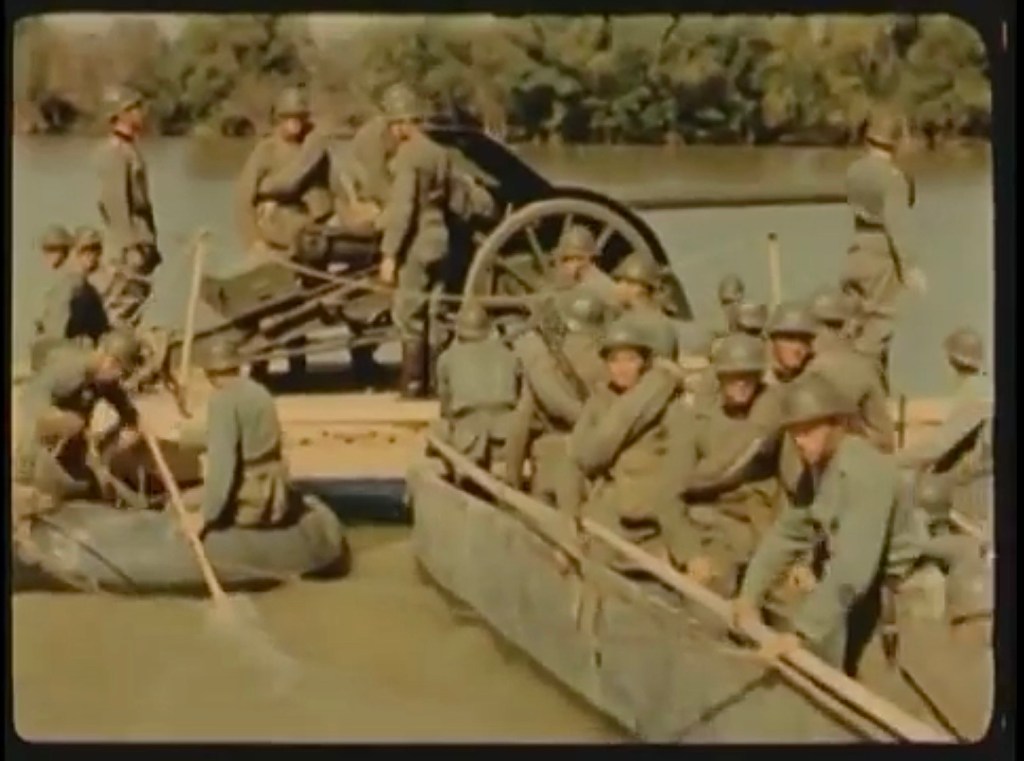
Right: Colorized footage of a training exercise in 1940 of a river crossing by Royal Yugoslavian engineer units alongside artillery. Note the Schnider 105mm field gun.
Still, any player will find that of the core weaknesses of this force is its lack of access to strong anti-tank weapons, relying largely on anti-tank grenades or static Light 37mm & Medium 47mm Anti-tank Guns. You will also notice that SMGs are non-existent, and firepower comes from your Artillery Observers and howitzers, lending to a more static force. To overcome these limitations a good commander will need to make use of well-placed ambushes, wise positioning, and patience.
What does a Royal Yugoslav Force Look Like?
What originally drew me to the Yugoslavians was their uniform. At first glance they look much like the French, but beyond the Adrian helmet, the uniform was distinct providing a fun chance to kit bash. Mid-level Officers tended to have a light gray uniform, with a distinctive Šajkača cap. When it came to the Yugoslavian footslogger, there seems to be contradicting information as to whether the WW2 uniform was light gray, green-gray, or brownish in color. Some even appear to wear left over Serbian WW1 uniforms. For headwear, soldiers wore the Šajkača Balkan cap or the well-beloved Adrian Helmet. Some better-equipped Engineer and most Guards units used the Czech M32 helmet. A shorter summer uniform was worn in the 1941 campaign, discarding of the longer greatcoats found on many French models. Footwear for riflemen consisted of ankle boots with puttees, or jackboots for better equipped units. Chetnik Assault Battalions (very different from the Chetnik partisans that would appear after the April war) had a very unique uniform, combining many irregular equipment like black sheepskin caps and bandolier along with a standard Yugoslav uniform.
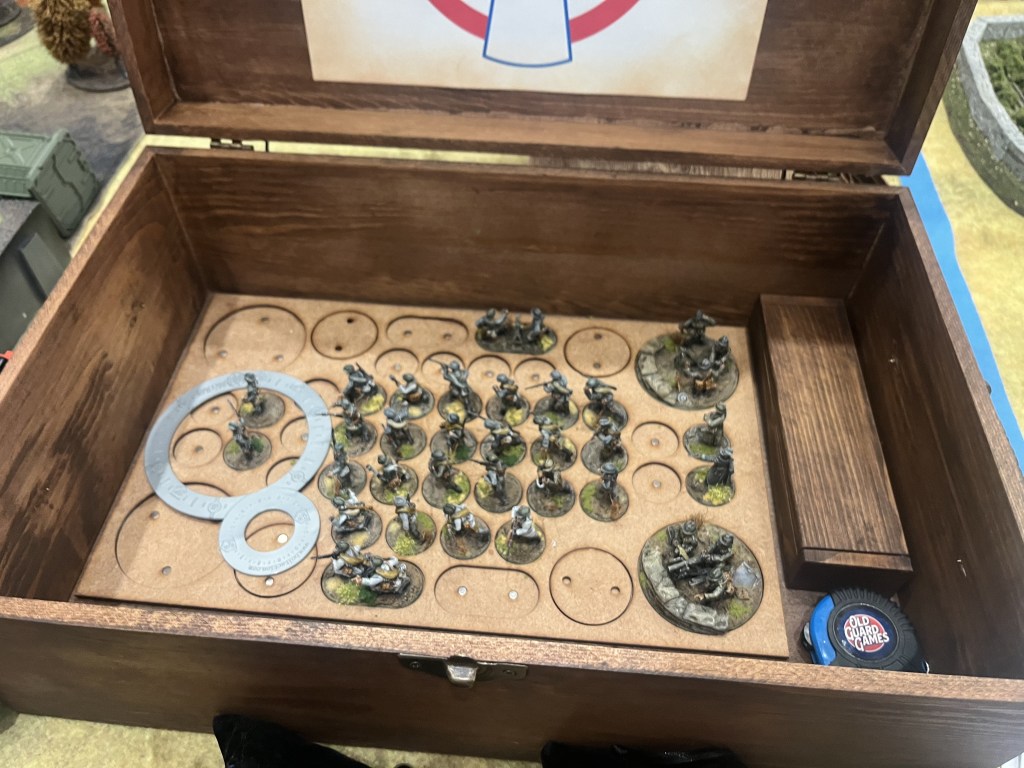
Left: My small Royal Yugoslavian Army combat patrol for Adepticon 2026. This 500pt force contained 1 rifle platoon of 2 squads and 1 heavy weapons platoon with a medium machine gun and medium Mortar. The forces contains a mix of kitbashed Wargames Atlantic plastic models, Warlord Belgian metal models (Heavy weapons) and Brigade Games metal officers.
When it comes to armored vehicles, we find everything from the standard R35 tank to old WW1 armored cars. The Skoda T32 (S-I-d) tank destroyer poses another hobby challenge with none available in 28mm or 1/56, but historical photos show they had a unique camo scheme that would be fun to paint. For artillery, 3D prints of Czech anti-tank guns, and artillery or using French pieces from Warlord Games are both a great option. Keep in mind heavy artillery can get very fun with massive 305mm siege mortars.
All together these unique bits help in making the Yugoslav force stand out on the tabletop from other armies.
The Army List
Looking to play an underdog? Fight for the Allies and beat back the Axis invasion? Enjoy the French Adrian helmet with a Slavic twist? Then look no further than the Yugoslavian Royal Army for your next force.
Historical Yugoslavian Sample Army
Here is a sample army list that would well reflect a fighting force in the April Campaign of 1941.
Note: This Yugoslav Rifle platoon is based off of the ideal formation as it should be equipped on paper. Large squads, and plenty of VB Launchers and infantry firepower, led by Platoon commander and a medic attached to support. To form a full Odred, I’ve added in the combined arms of an artillery observer, an artillery battery, and two R35 tanks. The reality of the war made such perfect platoon formations in the field unlikely.
| Rifle Platoon | |
| Platoon Commander – Reg – 30 +2 additional men – 20 | 50pts |
| Forward Artillery Observer – Reg – 75 +2 additional men – 22 Infiltrator | 97pts |
| Medic – Reg – 23 +1 additional man – 8 Self Defense, Medic | 31pts |
| Rifle Section – Reg – 12 men – 120 VB Launcher – 20 | 140pts |
| LMG Section – Reg – 11 men – 110 LMG – 15 LMG Loader has a Pistol – (-1) VB Launcher – 20 | 144pts |
| LMG Section – Reg – 11 men – 110 LMG – 15 LMG Loader has a Pistol – (-1) VB Launcher – 20 | 144pts |
| LMG Section – Reg – 11 men – 110 LMG – 15 LMG Loader has a Pistol – (-1) VB Launcher – 20 | 144pts |
| Artillery Platoon | |
| Platoon Commander – Reg – 30 +1 additional man – 10 | 40pts |
| Medium AT Gun – Regular – 70 Gun Shield | 70pts |
| Medium AT Gun – Regular – 70 Gun Shield | 70pts |
| Medium Howitzer – Regular – 85 Spotter – 10 Gun Shield – 5 | 100pts |
| Armored Platoon | |
| R35 – Regular – 105 Armor 8 Turret-mounted Low-Velocity Light AT Gun w/ coax MMG Command Vehicle – 10 Slow, One-man Turret, Armored All Around | 115pts |
| R35 – Regular – 105 Armor 8 Turret-mounted Low-Velocity Light AT Gun w/ coax MMG Slow, One-man Turret, Armored All Around | 105pts |
| Total – 13 Order Dice | 1,250pts |
Further Reading and Additional Resources
- Check out Balkan Military history for their amazing Yugoslavian force from last edition.
- For Royal Yugoslav models, check out the 28mm metal line from Badger Games.
- Want more? Check out Ghost Army Podcast Ep. 51 where I discuss running Royal Yugoslavians as Greeks for AdeptiCon 2026.

