
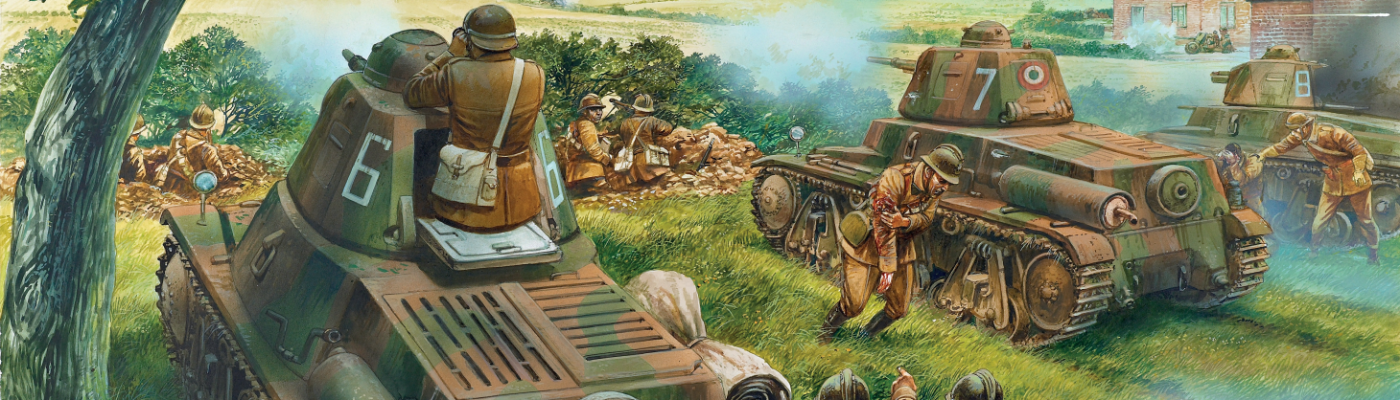
With Armies of France, we’ve reached what is likely the final stand-alone Armies of book for Bolt Action: Third Edition. Like Armies of Italy, the book is a major expansion for this so-called “minor nation”. Not only is France given the full Armies of treatment, but there are also two additional Appendix Force Selection Guides with new Army Special Rules and units exclusive for both the Army of Vichy France and the Free French Army. These additions are long overdue and provide even more options for any would-be French commander.
Before we get into the new book, let’s go back to First Edition France with Armies of France and the Allies. Then, let’s move to the early-Third Edition France PDF Army List. After all, in order to properly evaluate where we are, we need to take a look at how far we’ve come.
2013 – Armies of France and the Allies – Bolt Action: First and Second Edition
Published in 2013, Armies of France and the Allies provided Army Lists for seven Allied nations as an additional supplement the existing Armies of books for the Big Five. France, as the headliner, took center stage. We won’t go into the details of individual unit entries, but we should cover the Army Special Rules. France entered into Bolt Action First Edition with:
- Communication Breakdown!
- Forward Artillery Doctrine
- Hurriedly Conscripted Reserves
Communication Breakdown was an Army Special Rule shared among many of the “Minor Powers” in First and Second Edition. It’s one of those old-school rules that adds a bit of flavor and a bit of historical narrative but will have almost no impact on the game whatsoever. With Communication Breakdown, if the first Order Die on the first turn was French, the opposing player could decide if they wanted to put it back into the bag and draw a new one, or keep it. After that? Nothing. It was a rule that only played out on the first Order Die of the first turn.
Forward Artillery Doctrine stole the show. This allowed French players to add a free, additional AT Gun or Howitzer into their army list. If you recall, back in First and Second Edition, most players used the Generic Reinforced Platoon to organize their force and army list. The GRP only had one Artillery slot. Being able to take a second gun (and a free one at that) was a big deal. It gave French forces something both distinct and powerful.
In all my years as a player and a TO, I think I saw a French force utilize Hurriedly Conscripted Reserves twice. This rule gave you a free Inexp. Infantry unit if your force included three or more Inexp. Infantry units. The biggest reason you never saw anyone use this was because of the GRP restrictions, and you’d be saddled with four Inexp. Infantry units without the Army Special Rules to support them (Fire & Maneuver – US, Death Before Dishonor, Banzai Charge, Show Your Loyalty! – Imperial Japan, The Great Patriotic War, Not One Step Back! – Soviet Union). France had some highly competitive builds back then, but an Inexperienced Infantry Horde was not one of them.
Although not an Army Special Rule, the French had access to a special piece of equipment that other nations did not – the VB Launcher. For +20pts, you could add a VB launcher to most French Infantry units. With a 6-18″ range, this HE 1″ was both expensive and flavorful. It was something that differentiated a French force on the table even if players typically brought them for flavor over outright firepower.
In practice, the French only had one Army Special Rule that would have an impact on the game: Forward Artillery Doctrine.
As for units, the French Army List was far more robust than the other nations included in the book (with the exception of Poland). French commanders had access to:
- HQ – 3 unit entries
- Infantry Squads & Teams – 13
- Artillery – 6
- Vehicles
- Tanks/Tankettes/SPGs/AA Vehicles – 13
- Armored Cars & Recce Vehicles – 7
- Transports & Tows – 10
- Total – 52 unit entries
Although only having 13 Infantry Squads & Teams, there was a lot for the discerning French player to dive into. You had multiple options for the standing French Army, Foreign Legion, colonial troops (Senegalese Tirailleurs, Moroccan Goumiers), and Cavalry. Even with a short list of individual unit entries, there was plenty to theme your force around. The French Army List was later supplemented with various Theater and Campaign books. Right at the beginning of Second Edition, Campaign: Battle of the Bulge included a full Late-War Free French Army List using a combination of FFI and US-equipped units – it even had new Army Special Rules. By the end of Second Edition, and with the release of Italy: Tough Gut, players could access the fully US- and British-supported Free French Army in both Italy and North Africa.
2024 – France PDF Army List – Bolt Action: Third Edition
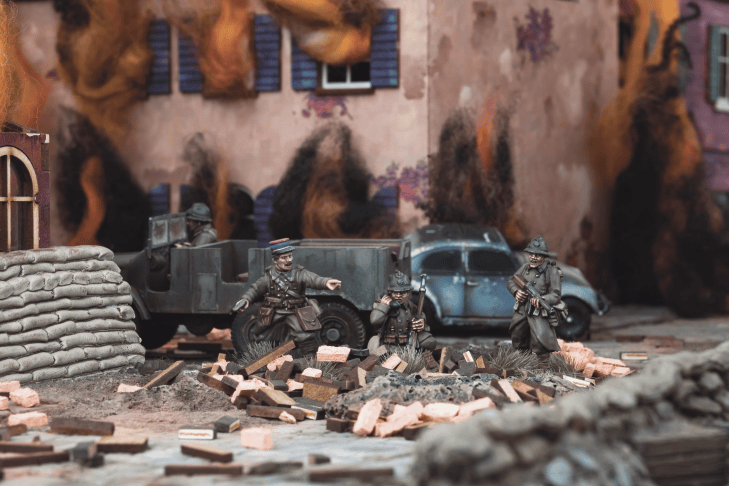
When Third Edition dropped, the Army Lists for the “Big Five” were included in the Bolt Action Rulebook. The Army Lists for the “Further Axis and Allied Nations” were released as free PDFs. The PDF Army Lists, much like the Rulebook Army Lists, condensed the units and Army Special Rules. France was no exception. The Army Special Rules for France at the dawn of Third Edition were:
- Forward Artillery Doctrine
- Highly-Motivated Reserves
It had the same name, but with the introduction of the Platoon System, Forward Artillery Doctrine no longer provided an extra Artillery unit. Now, any French Forward Artillery Observer could call in the Artillery Barrage twice per game. A potentially devastating ability that led to French lists with double-Artillery Observers as a common tactic.
Highly-Motivated Reserves was a throwback to the old Vengeance rule for Great Britain. But, in this case, it only applies to Inexperienced Units. In that manner, it was exactly the same as the Third Edition version of the Soviet For the Motherland! It was interesting to see an Army Special Rule that pushed the player towards running Inexp. Infantry without any additional support rules or units. Additionally, there was only one Inexp. Infantry unit option in the PDF Army List – the Infantry Section. The other five options for French Infantry units are all only Reg. or Vet. In the opening years of Third Edition, rarely did Highly-Motivated Reserves come into play.
And that brings us once again to the VB Launcher. The Third Edition PDF Army List version of the VB was … exactly the same as the Armies of France and Allies version. For +20pts, you got a HE 1″ with a range of 6-18″.
The stripped-down PDF Army List included:
- HQ – 3 unit entries
- Infantry Squads & Teams – 10
- Artillery – 3
- Vehicles
- Tanks/Tankettes/SPGs/AA Vehicles – 6
- Armored Cars & Recce Vehicles – 2
- Transports & Tows – 4
- Total – 28 unit entries
The PDF Army Lists are all a bit thin on unit count. But keep in mind, most of the French unit entries include multiple units combined into one entry. Just like the original “Army Lists for the Big Five in the Third Edition Rulebook, the PDFs were always intended as a “get-you-by” stopgap as we eagerly awaited the new wave of Third Edition Armies of books.
2026 – Armies of France: Third Edition
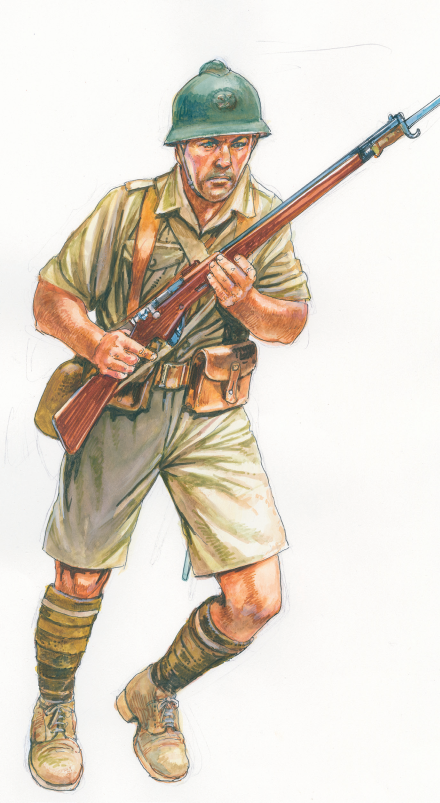
What’s in the book?
Armies of France is divided into six sections. It begins with a historical overview of The French Armed Forces in World War II, followed by Forces of France in Bolt Action, and then to the main event: The Army List, Sample Armies, and Force Selection Guides. The final section is Appendix: Mid-War and Late War French Forces and includes the two new Army Lists along with new Army Special Rules and units. With two historical overview sections and the Appendix, we are getting more background on the Army List options in AoF than most of the other Armies of books.
With 96 pages, Armies of France joins Armies of Imperial Japan and Armies of Italy as the slimmest Third Edition books. But that’s 96 pages of pure French Bolt Action. Armies of France and the Allies was 108 pages, but it includes seven nations! For additional context, Armies of the Soviet Union, United States, and Great Britain are all 112 pages, while Armies of Germany is 16 pages longer at 128. But, like Armies of Italy, the short page count is deceiving. It may be a slightly thinned-down book, but it still contains three full Army Lists. Armies of Italy set the template, and Armies of France follows. AoI included the Axis National Republican Army (RSI), the Allied Co-Belligerent Army. AoF has the Army of Vichy France and the Free French Army.
I. The French Armed Forces in World War II
Totaling 12 pages (included several full pages of artwork), The French Armed Forces in WWII covers a sweep of history starting with the preparations for the anticipated German invasion of France in September 1939, all the way through defeat and eventual victory as the returning Free French Army in 1945. Unsurprisingly, most of the ink is spent covering the initial German invasion, the French attempts to halt the advance, and the eventual fall of France. There is a focus on the determined spirit of the French soldier to defend his homeland, and the outdated and lumbering command structure that failed to react with both speed or determination to thwart the invasion. Highlights include the victory at Montcornet led by de Gaulle and the valiant defense of the Dunkirk pocket. The actions of the Free French Army, especially in North Africa, bring the sweeping narrative to a close. A look at Vichy France is also included, and with an additional Vichy Force Selection Guide, it’s no surprise to see it within this section of the book. The section concludes with a brief nod to the French Resistance, and although some Resistance units are included in the Free French Army List in the Appendix, the writers note the Partisan Army List as a more appropriate representation on the table for anyone looking to field La Résistance.
Although Bolt Action is, without question, a game of Hollywood Word War II, it should be noted the authors have done what they can to dispel the most common myth surrounding the French armed forces in WWII:
While the traditional narrative presents the French Army as a hopelessly outmoded and clumsy force that presented no resistance to the German Blitzkrieg, in truth it was an actively modernizing and well-equipped professional military supported by vast umbers of conscripted reservists, capable of both decisive offensive and valiant defensive actions. It was, however, hampered significantly by poor communications and a leadership over-reliant on a doctrine far more suited to the bloody fields of Verdun than the modern war they found themselves in, but this does not detract from the courage and valor of the men who stood against the onrushing Wehrmacht in defense of their country.
II. Forces of France in Bolt Action
We now focus on the three branches of the French Armed Forces that will feature in the Honneur Et Patrie! Army Special Rule starting with the Chasseurs Alpins (Mountain Hunters), then the Dragons Portes (Mobile Infantry), and the Foreign Legion. I was a big surprise to only see three options. I was fully expecting something like Resistance or Partisan or even Vichy to make an appearance. But, to be fair, those options are included in both the Appendix Army Lists. As with the previous books, I like the combination of history and designer notes within this section. The authors do a nice job exploring the inspiration for the unit special rules given to these specific forces.
III. The Army List
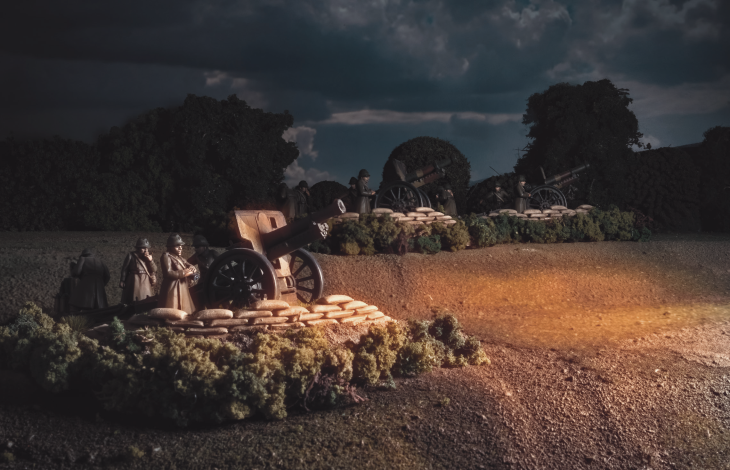
Army Special Rules – The French have five Army Special Rules, with only one carried over from the PDF Army List:
- Bataille Conduite (Methodical Battle)
- Colmater (Mobile Reserves)
- Le Feu Tue (Firepower Kills)
- Lack of Radios
- Honneur Et Patrie! (Honor and Country)
- Foreign Legion
- Chasseurs Alpins
- Dragons Portes
Bataille Conduite (Methodical Battle) applies to all French Infantry or Artillery units. If the unit takes a cover save because of an attack and then has to take a Morale Test because of the same attack, the unit counts as Stubborn for that test.
This is a great rule that grants additional staying power to all your Infantry and Artillery. We need to also call out that this rule applies to Artillery units with a Gun Shield. As long as they are taking fire from Small Arms, the Gun Shield provides Soft Cover. I’m wondering if this rule still applies if the attack ignores cover, such as indirect HE or a Flamethrower. Rules are written, the unit would not get the chance to take a Cover Save and therefore, would not gain Stubborn for the ensuring Morale Test. And for players going all in on Foreign Legion, Bataille Conduite will be of no benefit, as all units with Honneur Et Patrie! (Foreign Legion) are already Stubborn.
Le Feu Tu (Firepower kills) is one I’m surprised to see, as it’s a direct import from the PDF Army List. French Forward Artillery Observers may call an Artillery Barrage twice instead of once per game. Resolve the first barrage as normal. Then, after the first barrage has been resolved, the Observer may call in a second. A powerful Army Special Rule that, originally, the British also had. During First and Second Editions, this rule was represented by the French getting to bring a free Artillery piece; this version has the possibility of being even more devastating.
For me, Colmater (Mobile Reserves) is the standout Army Special Rule for the French. When you select your force, you may nominate a single unit per Platoon to be a Mobile Reserve. These units benefit from a +1 modifier to the roll for entering the table from Reserve (instead of the normal -1). In addition, when Outflanking, Mobile Reserves do not have to pick a side of the table in advance, but can decide when to use the left or fight short table edge right before testing to enter the table.
I love this rule. How about this for a strategy: pick a Transport as your Mobile Reserves unit. Load it up with assault troops. Then when you want to bring the Transport onto the table, you’ll be testing with a +1 modifier to your Order Test, and you can pick the side they arrive on from Outflank! Pack two squads of six Corp Francs, all with SMGs, into a General Purpose Truck and fly in from a flank for maximum havoc.
Lack of Radios makes a return exactly as we’ve seen for the Soviets. When you give the Command Vehicle special rule to a vehicle that does not have the Command Vehicle special rule in its entry in order to make it the Platoon Command Vehicle, you can give this rule for free instead of playing the normal +10pts. If you do so, however, the vehicle reduces the radius of its Command Vehicle rule from 12” to 6”. This represents communication by means of flags or hand signals. A small, flavorful rule that can save you some points and also better represents the capabilities of French armor at the time.
Last is Honneur Et Patrie! (Honor and Country). No surprise to see this style of Army Special Rule included as all the other Armies of have added these options to the units in the Army List. For the French, we have three flavors:
- Foreign Legion
- Units must be taken as Veteran.
- Units must be given the Honneur et Fidelite (Honor and Fidelity) special rule for +1pt per model:
- The unit is Stubborn, and in addition it counts as Fanatics in the first round of close quarters if it benefits from a Defensive Position bonus.
- Chasseurs Alpins
- Units must be taken as Veteran.
- Units must be given Fieldcraft for +1pt per model.
- They also have Winter Equipment:
- Skis for no additional cost. An Infantry unit equipped with Skis ignores all negative movement effects related to snow or ice.
- Dragons Portes
- Units cannot be taken as Inexperienced.
- Units must be given the Motorised special rule for +1pt per model:
- This unit can re-roll any failed Order Test that is required to mount or dismount a Transport vehicle or Motorcycle.
Now this is very interesting. Motorcycles are not like a Transport vehicle. You don’t take a specific Order Test to dismount from Motorcycles, and you cannot remount them once you hop off. As part of any Run or Advance move, you can choose to dismount. So, does this mean a Dragoon unit can re-roll a failed Order Test to Run or Advance if that was the move they were going to use to dismount?
Quartermaster’s Stores – Specialized equipment and rules for the French Army include:
- VB Launcher
- Demolition Charge
- Low-Velocity Anti-tank Gun
She’s back! It wouldn’t be Bolt Action French without the VB Launcher. Unique to the French but similar to the Imperial Japanese Type 89 Grenade Launcher, aka the Knee Mortar. The IJA version is +25pts and replaces the soldier’s Rifle. The Knee Mortar also requires another model to act as a Loader. They can fire at a different target than the rest of the unit, but all Knee Mortars in the squad must fire at the same target.
The VB Launcher has a few differences. Both the Knee Mortar and the VBs are 1” HE. But the VB is 5pts cheaper at 20pts. They have a 6-18” range, instead of 6”-36”. Critically, the VB does not replace the Rifle, and does not require a loader. If you have multiple VBs in the same unit, they can pick different targets. Expensive, but potentially devastating, especially when concentrated. The Dragons Porte VB Group looks especially terrifying.
The Demolition Charge is the same for the French as for everyone else. There are two units with the option to add a Demo Charge, all for the standard +20pts. The Corps Franc Section in the Army List and the FFI Sabotage Team in the Free French Army Force Selection Guide.
The Low-Velocity AT Gun is a Light AT Gun but only has Pen +3. There is one Artillery unit that you can make Low Velocity for a 10pt discount, and there are seven vehicles armed with a Low-Velocity AT Gun. However, on some you can upgrade from Low Velocity back up to a standard Light AT Gun for +10pts. It’s a slightly worse, but slightly cheaper option that reflects armament available at the time. Personally, I think the +10pt cost to bump the ATG from +3 to +4 is worth every penny.
The Units
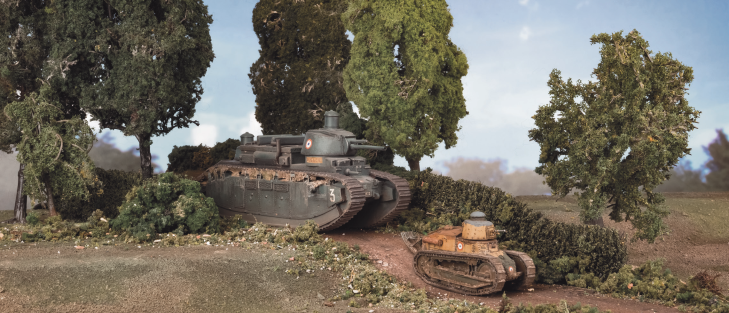
From the Fall of France in 1939 to the deserts of North Africa and the Liberation of Paris, The Army List contains a wide selection of units:
- HQ – 4 unit entries (4 Italy / 4 Imperial Japan / 4 Soviet Union / 4 Great Britain / 4 United States / 4 Germany)
- Infantry Squads & Teams – 19 unit entries (20 / 25 / 30 / 20 / 28 / 45)
- Artillery – 8 unit entries (8 / 12 / 14 / 10 / 12 / 17)
- Vehicles
- Tanks/Tankettes/SPGs/AA Vehicles – 18 unit entries (20 / 19 / 31 / 43 / 47 / 55)
- Including 2 British Cruiser Tanks in French service
- Armored Cars – 10 unit entries (6 / 9 / 6 / 21 / 5 / 20)
- Transports & Tows – 15 unit entries (4 / 11 / 7 / 20 / 17 / 18)
- Ambulances – 1 unit entry (0 / 1 / 1 / 2 / 2 / 2)
- Tanks/Tankettes/SPGs/AA Vehicles – 18 unit entries (20 / 19 / 31 / 43 / 47 / 55)
- Vichy– 2 unit entries included in the Army of Vichy France Mid-War Force Selection Guide
- Free French – 4 unit entries included in the Free French Army Mid-War and Late-War Force Selection Guide
- Total – 81 unit entries (69 Italy / 81 IJ / 108 USSR / 137 GB / 115 US / 183 Germany)
New Unit Special Rules – A few new unit special rules within the Army List and Force Selection Guides to highlight:
- Improvised Role – A special rule added to the 75mm Dual-Purpose AA Gun (a Heavy AT Gun on a rotating platform); when the gun fires at a ground target, it takes a Pin. A bit like a Flamethrower or a Multiple Launcher.
- Super-Heavy Howitzer – A WWI relic, the Canon de 194 “Saint-Chamond” hits with d6 Pins and an absurd 4d6 hits against targets inside buildings. However, the 48″ minimum range will all but ensure you will be unable to fire indirectly!
- Counter Partisan Tactics – The GMR Section in the Vichy Force Selection Guide has an interesting combination of rules meant to counter enemy units with Infiltrator. Once the GMR Section has been deployed, no enemy units may infiltrate within 24″ of it. On its own, that’s fine. But keep in mind, the GMR Section also has Infiltrator. If you get to place the first Infiltrating unit, you’ll be able to block enemy deployment in a big way.
- Intelligence Gathering – The FFI Section in the Free French Force Selection Guide represents the Maquis guerrillas operating in France. This special rule is much like Intelligence on a Platoon Commander, but instead it’s for an Infantry squad. Intelligence Gathering has the same effect; it gives you a once-per-game chance to pick the first Order Die for a Turn. But, unlike Intelligence (modified by experience level), Intelligence Gathering is modified by the size of the squad. If the squad has 10+ models, add the +1 modifier to your roll. A fun twist on the Intelligence mechanic, but I don’t know if it’s worth a +50pt upgrade on a squad that can only be Inexp.
- Marksman – The FFI Sabotage Team has the option to turn the NCO into a Marksman for +30pts. If this option is taken, the unit gains the Sniper special rule. For all intents and purposes, the Marksman option turns this two-man team (22pts Reg / 28pts Vet) into a Sniper Team for 52pts Reg / 58pts Vet (a big discount from the 67pt Vet Sniper Team). The unit also has the option to add a third man; any of them can take SMGs, they are already Infiltrators, and they have the option for a Demo Charge. It’s a fun little unit that, critically, is not in the Sniper slot of the Platoon; it’s a basic Infantry unit. A Rifle Platoon with two FFI Sabotage Teams and a Sniper Team could be worth exploring.
Like Armies of Italy and Armies of Imperial Japan, Armies of France is another small but mighty book. There is more unit variety and options for creating your force than first meets the eye.
IV. Sample Armies
Armies of France includes four sample armies that give players (especially new ones) a sense of what a Bolt Action army actually looks like. The included forces are:
- Defending the Border– 1,000pts
- Returning and Liberators – 1,000pts
- Armored Assault – 1,250pts
- Vichy Garrison – 750pts
As always, I appreciate Sample Armies. They are not for me (the grizzled Bolt Action Veteran that I am), but they provide great examples for new players on how to shape their French force. The Sample Armies give context. Each Sample Army utilizes a unique mix of units and a different historical setting to put a themed force on the table. Frustratingly, we are once again faced with poor layout and design decisions. The layout splits each army photo across the page break. And the models in the army photos are too spread out. While the models are beautifully painted and displayed, there’s a lot of dead space. All six previous books have this problem – fingers crossed it’s addressed for Armies of Europe. (I am sure it won’t be. This makes eight books in a row.)
V. Force Selection Guides
As with all Third Edition Armies of books, AoF includes Force Selection Guides. But unlike the other books, this section only includes an Early War Selection Guide – the Army of the Third Republic. With Theater Selections removed from Third Edition (except for the 1944 Operation Rosselsprung German Force Selector), this Guide offers an easy-to-reference list of units for Early War. While broad, they are perfect starting points. Players can choose a period, consult these Guides, and then delve deeper into historical details – or not! One of the great aspects of Bolt Action is that you can be as historically “accurate” as you like.
VI. Appendix: Mid-War and Late War French Forces
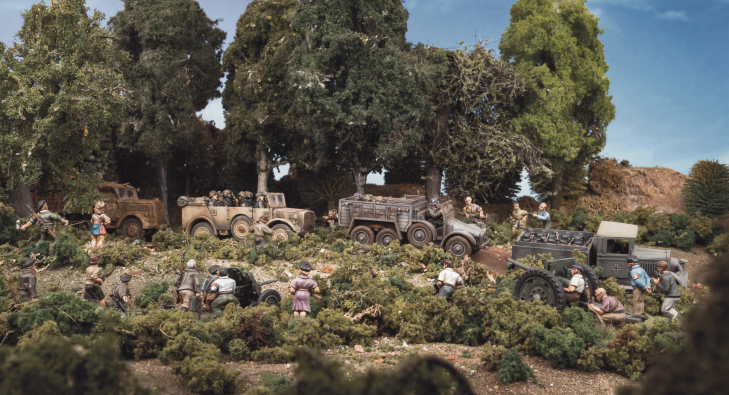
The final section of AoF contains two additional Army Lists in the guise of Force Selection Guides. This is not your typical Force Selection Guide, oh no. The Appendix gives players two full Army Lists plus new Army Special Rules for both the Axis Army of Vichy France and the Allied Free French Army.
The Army of Vichy France
The Army of Vichy France gives players the option to put an Axis-aligned French force on the table. It could be used to make the “Armistice Army” within southern France or a more heavily armed colonial force. The Army Special Rules are:
- Colmater
- Lack of Radios
- Honneur et Patri (Foreign Legion only)
- Loyalty to Le Marechal – Every time a Vichy Infantry or Artillery unit is forced to take a Morale Test, roll a d6 before the test and apply the result:
- 1 – Test as if the unit has lost its NCO.
- 2-3 – Nothing happens; test as normal.
- 4-5 – The unit counts as Stubborn for the test.
- 6 – The test is automatically passed.
Plus two new units, exclusive for Vichy use. The French Milice (Militia) Squad and the GMR Section. The Milice can only be Inexp. and are Green. Unlike the GMR, they have very few weapon options. The GMR Section, however, are Regs and start with only three models. You can add up to 9 more for 11pts each, as well as:
- Give anyone a pistol for -1pt
- Give anyone an SMG for +4pts
- Take one LMG
- Make one GMR Section Infiltrators for +1pt per model or give them Motorcycles for +5pts per model.
- They have Counter Partisan Tactics – one of the new unit special rules mentioned earlier.
The Free French Army
Similar to the Armies of Free France: Late War Army List from way back in Campaign: Battle of the Bulge, the Free French Army allows a combined force of US- and British-supplied French soldiers and Maquis resistance units. The Free French Army Special Rules are:
- Sacred Ground – All Infantry and Artillery units have Stubborn.
- Local Area Knowledge – Forces of Liberation units ignore the -1 modifier to the Order Test for coming onto the table from Reserve.
- La Resistance – FFI units may never be the mandatory units in the Platoon.
- Armée d’Afrique – Some Free French units have the option to add Armée d’Afrique:
- Cannot be Inexp.
- Must be given Fieldcraft for +1pt per model.
- This also applies to Light Howitzers and Light AT Guns.
There is a full Free French Army Mid-War and Late War Selection Guide that includes three new Infantry units and one vehicle exclusively for Free French use. The FFI Section is your classic French Resistance unit. They can only be Inexp and start at 5 models, but you can add up to 10 more. You have the option for three SMGs total, one LMG, and one unit per force may be upgraded to Intelligence Gathering.
The FFI Sabotage Team is a real treat. Only two models in the squad. Can only add one more for 11pts Reg or 14pts Vet. Anyone can swap for SMGs or Pistols. You can bring one Demolition Charge for +20pts, and the NCO, if they are armed with a Rifle, can be upgraded to a Marksman for +30pts. That means you could have many, many “Sniper Teams” in your Free French if you wanted. The FFI Sabotage Team is an Infantry Unit, so you can take two of these in a Rifle Platoon plus your normal Sniper Team.
A surprise addition is the North African Tirailleur Section representing troops from Algeria, Morocco and/or Tunisia. Can be Reg or Vet, with the option for a couple of SMGs, an LMG, or an Automatic Rifle – don’t see that very often. They come with Fieldcraft and form the backbone of any Armée d’Afrique.
And finally, the Canon de 75 Portee. The iconic Free French Ford and Chevy Truck with a French 75 mounted on the bed. Reg or Vet, Soft-skin with a rear-facing Light Howitzer, with the option to take Armor Piercing Shells for +5pts. If you do, you can fire as a Light AT Gun with Pen +3. A classic option for your Foreign Legion fighting in North Africa.
So there is a lot to unpack in this Free French Force Selection Guide. What I mean is, you can lean in some very distinct ways:
- French Resistance
- Free French Forces in Africa
- Army of Free France for Italy, post-Normandy, and Battle of the Bulge (the US and British-equipped version):
- There are 39 US units, including Paratrooper Squads, Bazooka Teams, Shermans, Greyhounds, Recon Jeeps, and Dodge Trucks.
- and 28 British units, including SAS, Commandos, Cromwell and Centaur Tanks, SAS Jeeps, and Staghounds.
Thus, just like Armies of Italy, this book pulls from the library of existing Armies of books to deliver something more comprehensive than we anticipated. It’s a joy to read and a thrill to dream up new army ideas and hobby projects using this book.
Overall Impressions
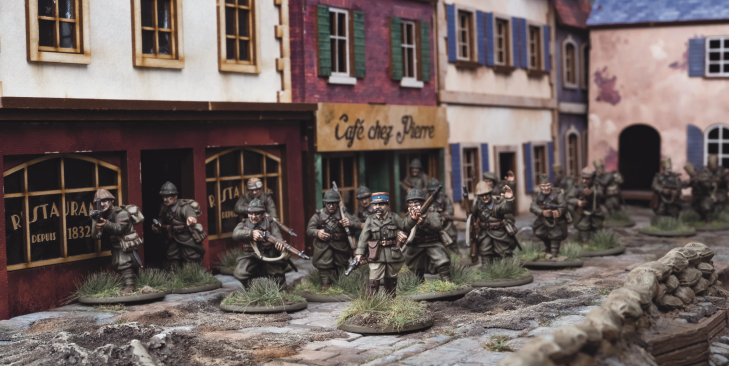
I’m impressed. As comprehensive as Armies of the British Commonwealth was, it’s overwhelming. It suffers ever so slightly from the jack-of-all-trades, master-of-none effect. Armies of France is more focused, more concentrated. Even with the two Force Selection Guide options and the vast amount of French flavors within, it’s “just” France. After Armies of Italy, I had high expectations for this book, and it delivered. Both France and Italy have come a long way from their consolidated Allies and Axis books, supplemented by numerous Theater and Campaign books, and then cut down into a PDF Army List, to finally emerge like a phoenix from the ashes with their own Armies of books for Third Edition. It just about brings a tear to your eye.
Everything about this book is hype. Early War hype. Foreign Legion hype. Vichy hype. Free French hype. If a unit fought under the French flag in WWII, you can represent them with this book. New rules, new twits on existing rules, unit option galore. France now stands shoulder to shoulder with the rest of the “Big Five”, as she always should have.
Vive la France!

Thank you to Warlord Games for providing a digital copy of Armies of France: Third Edition featured in this article.
More Third Edition Armies of reviews:

